Generative Engine Optimization (GEO) & Citation SEO 2026
Generative Engine Optimization (GEO) & Citation SEO 2026 represents the single biggest shift in how brands earn digital visibility since the introduction of mobile-first indexing.
An extraordinary 93% of searches performed in conversational AI mode end without a single click to an external website, which means the old playbook of chasing blue-link positions is no longer sufficient on its own.
Key Takeaways
| Question | Key Answer |
|---|---|
| What is GEO in 2026? | GEO is the practice of structuring content so AI models cite your brand as an authoritative answer inside their generated responses. |
| Is traditional SEO still relevant? | Yes. Strong SEO fundamentals remain the foundation, but GEO layers on top of them to capture AI-driven discovery. |
| What does Citation SEO mean? | Citation SEO focuses on earning named mentions and source references inside AI-generated answers, summaries, and overviews. |
| How do I start with GEO if I’m new? | Begin with an SEO starter guide to nail the fundamentals, then layer GEO tactics like structured data and citation-worthy factual density. |
| Which tools support GEO tracking? | Platforms like Rankability and SEO Gets offer AI visibility and performance tracking that go beyond standard analytics. |
| Does content quality affect AI citations? | Heavily. Adding specific statistics and authoritative citations to content boosts visibility in AI responses by 40%. |
| How does GEO affect organic traffic? | AI-referred visitors convert 4.4x better than traditional organic traffic, making GEO citations extremely high-value even at lower click volumes. |
What Is Generative Engine Optimization (GEO) & Citation SEO 2026?
Generative Engine Optimization (GEO) & Citation SEO 2026 describes a two-part strategy. The first part involves making your content easy for large language models (LLMs) to extract, trust, and cite. The second part involves appearing as a named source inside AI-generated answers.
Traditional search engine optimization focused on ranking pages in a results list. GEO shifts the goal: you want the AI itself to quote your content, reference your data, or recommend your brand as part of its synthesized response.
This distinction matters because billions of queries now go directly to tools like ChatGPT, Gemini, Perplexity, and Google’s AI Overviews. Winning those surfaces requires a different kind of content optimization than simply placing keywords in headings.

Why Generative Engine Optimization (GEO) & Citation SEO 2026 Changes Everything
The numbers behind this shift are hard to ignore. Google AI Overviews now appear in over 25% of all searches in 2026, nearly doubling from early 2025. Every one of those overviews is a potential citation opportunity or a missed opportunity depending on how your content is built.
For brands that have been focused purely on technical SEO and traditional link building, this can feel like an entirely new discipline.
In practice, it builds on what you already know, but demands a higher standard of factual density, structural clarity, and authority signaling.
Understanding this shift is especially important if you are using an SEO tutorial or beginner SEO framework.
Those foundational skills in keyword research, website optimization, and organic traffic growth are still valid. They just need to be extended with GEO-specific thinking.

A concise visual guide illustrating the five essential GEO and Citation SEO factors shaping search rankings in 2026.
The GEO Content Optimization Framework for 2026
Effective content optimization for GEO follows a specific logic. AI models prefer content that is factually dense, structurally clear, and demonstrably authoritative. Here is how to build it.
Front-Load Your Most Valuable Information
Research shows that 44.2% of all LLM citations are pulled from the first 30% of a page’s text. This means your definitions, core arguments, and key statistics need to appear near the top of each page, not buried five scrolls down.
This also aligns with good website optimization practice. Users and AI models both have limited patience. Lead with your answer, then support it with depth.
Use Specific Statistics and Authoritative Data
Vague claims get skipped. Specific, verifiable data gets cited. Every piece of content you publish in 2026 should include original research, curated statistics, case study numbers, or expert-sourced claims wherever possible.
This is the core mechanic of Citation SEO: when an AI needs to justify a recommendation, it reaches for the most credible, specific source it can find. Make your content that source.
Structure Content for AI Extraction
Use clear H2 and H3 headers that answer specific questions. Also use bullet points for list-format information. Use tables for comparisons. These structural signals help LLMs parse and extract your content accurately.
If you are following a beginner SEO path, think of this as on-page optimization taken to its logical conclusion. Every structural choice you make either helps or hinders an AI’s ability to understand and re-use your content.
Did You Know?
83% of AI Overview citations come from pages that do not rank in the traditional Google organic top 10. You can win AI visibility even without dominating the blue-link results.
Best SEO Tools That Support GEO and Citation SEO in 2026
Executing Generative Engine Optimization (GEO) & Citation SEO 2026 strategies requires the right SEO tools. Below are some of the most relevant options available this year.
Rankability
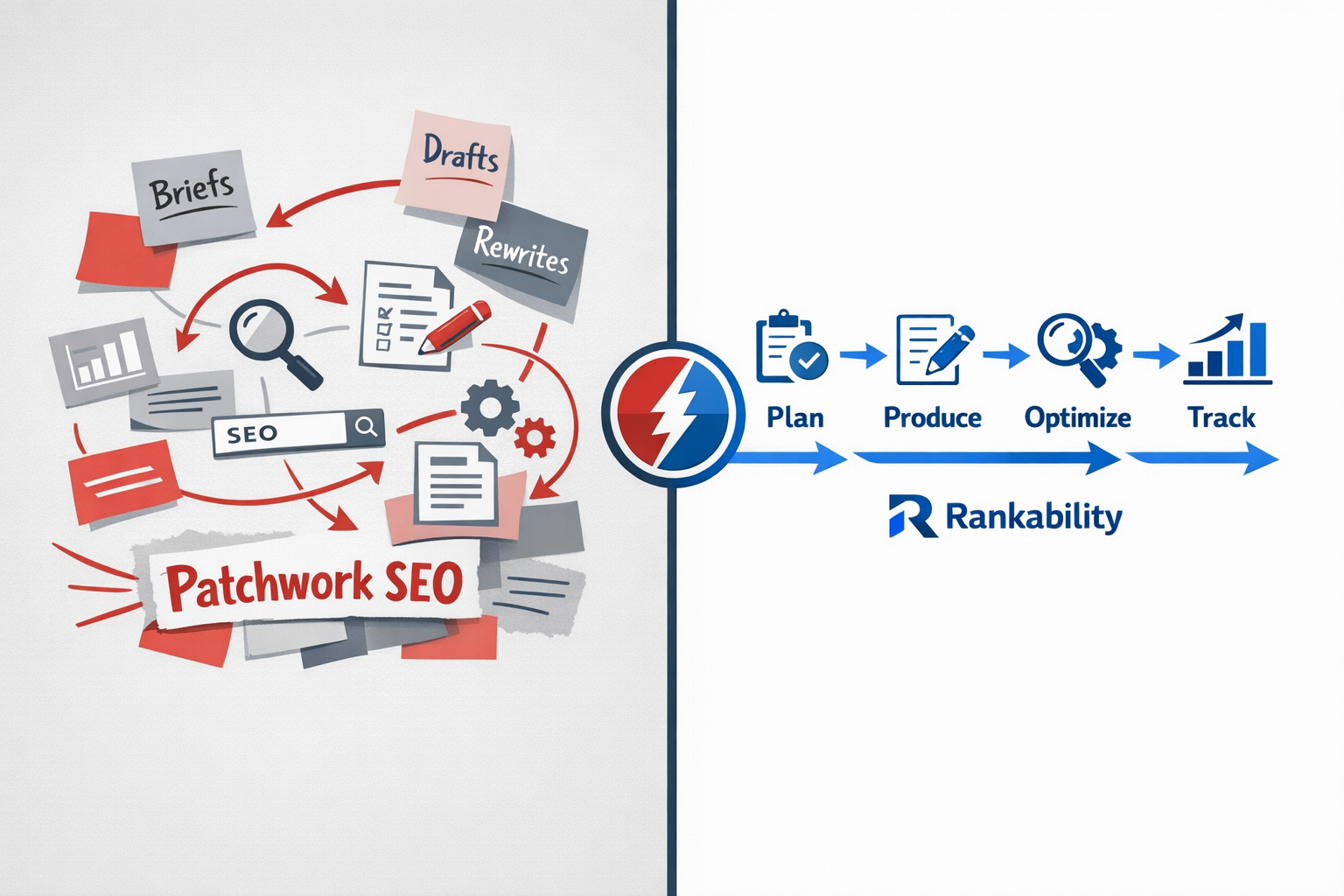
Rankability is an agency-focused AI platform that combines keyword research, content brief generation, AI writing assistance, on-page optimization, and AI visibility tracking. It is priced at $149 per month for the agency plan.
What makes it particularly relevant for GEO is the AI visibility tracking feature. You can monitor whether your content is being surfaced inside AI-generated responses, not just in traditional positions. This kind of measurement is essential as GEO matures as a discipline.
SEO Gets
SEO Gets positions itself as a professional analytics platform that goes beyond Google Search Console, offering content groups, index health monitoring, and annotated testing for performance tracking.
For teams running GEO experiments, the ability to track index health and annotate tests is valuable. You need to know whether your content improvements are being indexed and picked up before they can be cited.
Google Search Console
Despite the rise of new platforms, Google Search Console remains a non-negotiable baseline tool for any website optimization workflow. It provides indexing data, performance metrics, and coverage reports that underpin every other analytical decision.
For GEO specifically, Google Search Console helps you confirm that your target pages are being indexed correctly, which is the first requirement for any AI citation. Pages that are not indexed cannot be cited.
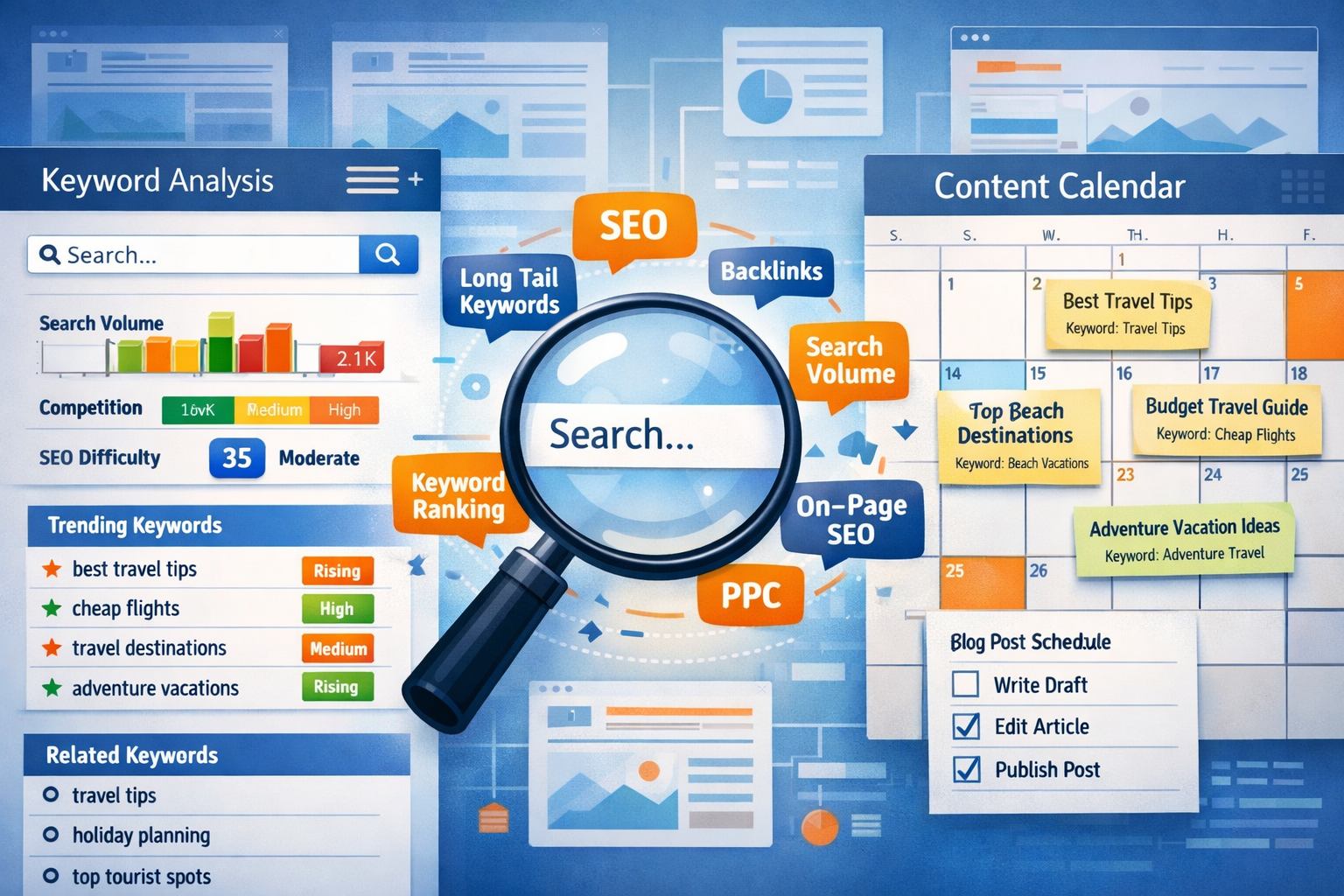
Keyword Research for GEO and Citation SEO in 2026
Keyword research in 2026 has evolved well beyond matching search terms. For Generative Engine Optimization (GEO) & Citation SEO 2026, you are researching the questions that people ask AI models, not just the phrases they type into a traditional search bar.
This requires thinking in full sentences and conversational queries. Questions like “what is the best tool for X” or “how should I approach Y in 2026” are the kinds of prompts that trigger AI-generated responses where citations happen.
Focus on question-based keywords: Who, what, how, why, and when queries are the most likely to generate AI responses with cited sources.
Target comparison queries: “X vs Y” formats are heavily used by AI models when recommending products or approaches.
Identify definitional queries: “What is [term]” questions are core Citation SEO targets because AI models frequently quote definitions directly from authoritative sources.
Use long-tail keyword variations: The more specific the query, the higher the intent and the more likely your content becomes the cited answer.
If you are new to this area, our SEO starter guide covers the foundational keyword research methods that pair well with GEO-focused query targeting.
Technical SEO and Website Optimization for GEO Readiness
Technical SEO is not optional in 2026. AI crawlers and traditional crawlers both depend on clean, fast, well-structured websites to process and cache content. If your technical foundation is weak, GEO efforts will underperform regardless of content quality.
Here are the critical technical SEO checkpoints for GEO readiness in 2026:
Page speed: Load times above three seconds reduce crawl frequency and increase bounce rates on any pages that do receive clicks.
Mobile-first performance: Mobile indexing is the default. Pages that render poorly on mobile devices are deprioritized across all surfaces.
Structured data markup: Schema.org markup helps AI models understand the type of content on a page, whether it is an article, FAQ, product, or how-to guide.
Canonical tags: Duplicate content confuses AI extraction. Clean canonical structures ensure the right version of each page gets credit.
Crawlability: Robots.txt errors and broken internal links prevent pages from being indexed and therefore from being cited.
Combining strong technical SEO with GEO-ready content is the minimum viable approach for any brand aiming for sustained AI visibility in 2026.
Link Building and Authority Signals in the GEO Era
Link building remains a core authority signal in 2026, but its relationship to GEO is more nuanced than its relationship to traditional page ranking.
AI models weight source credibility when selecting citations. Pages that carry strong backlink profiles from reputable domains are treated as more credible and more citation-worthy. Effective link building directly supports your GEO strategy by raising the perceived authority of your content.
However, GEO also introduces a new kind of authority signal: being cited by AI models creates a feedback loop. When your content is referenced in an AI Overview or a ChatGPT response, it gains social proof that further signals credibility to both users and models.
For small business owners and those newer to this space, our guide on SEO strategy for small businesses covers practical link building approaches that work within realistic budgets while still building the authority needed for GEO citations.
Organic Traffic in the Zero-Click Era: How GEO Changes the Metrics
One of the most disorienting aspects of GEO for teams accustomed to measuring organic traffic is that citation success does not always show up as a click. When an AI model cites your brand inside a generated answer, many users accept that answer without visiting your site.
This does not mean those citations have no value. AI-referred visitors who do click through convert at 4.4x the rate of traditional organic visitors. Being cited also builds brand recognition at scale, which influences future purchasing decisions even when no click occurs.
The practical implication: teams need to expand their metrics beyond organic traffic volume. Brand mention monitoring, AI citation tracking, and share-of-voice measurements are the new indicators of GEO performance.
Did You Know?
Adding specific statistics and authoritative citations to your content boosts visibility in AI responses by 40%, according to data from Search Engine Land.
AI Content Tools and Automation for GEO at Scale
Producing enough high-quality, GEO-ready content to compete across hundreds of queries requires systematic content production. This is where AI content creator tools and content automation platforms become essential.

The most effective approach in 2026 combines AI-assisted drafting with human editorial oversight. AI tools handle research, first drafts, and structural formatting. Human editors add the specific data, original insights, and expert perspective that make content citation-worthy.
This hybrid model produces content faster than pure human authorship while maintaining the quality standard that GEO demands. Pure AI output without human refinement typically lacks the factual specificity and nuanced authority that LLMs look for when choosing sources to cite.
For teams scaling content operations, a content automation platform can connect AI-assisted writing with publishing workflows, analytics, and multi-channel distribution, reducing the manual overhead of managing large content programs.
Generative Engine Optimization (GEO) & Citation SEO 2026 for Beginners
If you are approaching Generative Engine Optimization (GEO) & Citation SEO 2026 for the first time, the learning curve is manageable when broken into clear stages. This functions as a practical SEO tutorial pathway for anyone starting from scratch.
Stage 1: Foundations (Weeks 1-4)
Complete a structured beginner SEO program covering on-page basics, keyword research, and site structure.
Set up Google Search Console and confirm your site is indexed correctly.
Identify your 10-20 most important topic areas and create a content plan around them.
2: Content Optimization (Weeks 5-10)
Audit existing pages for factual density and add statistics, data points, and expert citations where missing.
Restructure pages with clear question-based headings that match how people prompt AI tools.
Add FAQ sections to all major pages to target conversational query patterns.
Stage 3: Authority Building (Ongoing)
Pursue link building through guest content, partnerships, and original research publication.
Monitor your brand mentions across AI platforms and traditional search to identify citation gaps.
Refresh content regularly with updated statistics and new data to maintain citation relevance.
Our content writing services and AI content tools guide provide supporting resources for each of these stages.

Measuring GEO Performance: What to Track in 2026
Traditional search engine optimization measurement focused heavily on keyword positions and organic traffic volumes. GEO requires an expanded measurement framework.
| Metric | What It Measures | GEO Relevance |
|---|---|---|
| AI Citation Frequency | How often your content appears as a source in AI-generated responses | Core GEO KPI |
| AI Overview CTR | Click-through rate from AI Overview citations to your site | High – cited brands get 35% CTR boost |
| Brand Mention Volume | Total mentions of your brand name across AI and web surfaces | High – feeds future AI citation likelihood |
| Organic Traffic Quality | Conversion rate of visitors arriving from AI referrals vs. standard results | High – AI visitors convert 4.4x better |
| Index Coverage Rate | Percentage of your content that is indexed and crawlable | Foundational – unindexed pages cannot be cited |
| Topical Authority Score | Depth and breadth of coverage across a given topic cluster | High – broader authority increases citation frequency |
Tools like Rankability provide AI visibility tracking that captures some of these newer metrics, while Google Search Console covers the foundational indexing and performance data that underpins all GEO measurement.
Conclusion
Generative Engine Optimization (GEO) & Citation SEO 2026 is not a replacement for the discipline of search engine optimization. It is an evolution of it, demanding higher factual standards, stronger structural clarity, and a broader definition of what “visibility” means in an AI-dominated discovery landscape.
The brands that will win in 2026 are those that treat every piece of content as a potential citation source.
That means investing in keyword research depth, maintaining rigorous technical SEO hygiene, building genuine link building authority, and producing content that AI models trust enough to quote.
Whether you are working through your first SEO starter guide or managing an established content program, the principles of Generative Engine Optimization (GEO) & Citation SEO 2026 are accessible at every level.
The key is to start with a strong foundation in website optimization and content optimization, then systematically add the GEO-specific tactics that make your content citation-worthy.
The shift is already underway. The brands investing in GEO today will be the ones AI models cite tomorrow.
Frequently Asked Questions
What exactly is Generative Engine Optimization (GEO) and how is it different from regular SEO?
Generative Engine Optimization (GEO) is the practice of structuring and writing content so that AI models like ChatGPT, Gemini, and Google’s AI Overviews select your pages as cited sources in their generated responses.
Traditional search engine optimization focuses on earning a ranked position in a list of results, while GEO focuses on earning a direct citation inside an AI-generated answer. Both disciplines complement each other in 2026.
Can I do GEO as a beginner, or do I need advanced SEO experience first?
A beginner SEO foundation is helpful before diving into GEO, but you do not need years of experience to start. Following a structured SEO starter guide that covers on-page basics, keyword research, and technical setup will give you everything you need to layer GEO tactics on top.
The most important GEO skills, such as writing factually dense content and using question-based headings, are learnable early in the process.
Is Google Search Console still useful for tracking GEO performance in 2026?
Yes. Google Search Console remains essential for confirming that your pages are indexed and performing correctly in traditional results, which is a prerequisite for GEO citations since AI models cannot cite pages that are not indexed.
For AI-specific visibility tracking, supplementary tools like Rankability provide the additional GEO measurement layer that Google Search Console does not cover on its own.
How do I get my content cited by AI models in 2026?
The most reliable approach is to publish content that is factually specific, structurally clear, and demonstrably authoritative.
Include verifiable statistics, use question-based headings that match how people prompt AI tools, add structured data markup, and build backlink authority through consistent link building.
Research confirms that adding specific data points boosts AI citation frequency by 40%, so factual density is one of the highest-leverage changes you can make.
Does GEO work for small businesses, or is it only for large brands?
GEO is particularly valuable for small businesses because 83% of AI Overview citations come from pages that do not rank in the traditional top 10, meaning you do not need massive domain authority to be cited.
Focused, authoritative content within a specific niche can earn AI citations even for newer or smaller sites. Starting with a clear content optimization strategy around a narrow topic cluster is the most efficient approach for smaller teams.
How does citation SEO affect organic traffic if most AI searches end without a click?
While it is true that the majority of conversational AI searches end without a click, the visitors who do click through from AI citations convert at 4.4x the rate of standard organic traffic visitors. Beyond direct traffic, citation SEO builds brand recognition at scale, influencing future purchasing decisions even in sessions where no click occurs. The metric of “organic traffic volume” alone does not capture the full value of strong GEO performance in 2026.
What is the best SEO tool for tracking GEO and AI visibility in 2026?
Rankability is one of the most purpose-built options for GEO-focused agencies and content teams, combining AI visibility tracking with keyword research, content brief generation, and on-page optimization in a single platform at $149 per month.
SEO Gets offers strong analytics and index health monitoring as a complement or alternative to Google Search Console. The right combination of SEO tools depends on your scale and budget, but AI visibility tracking should be part of any serious GEO stack in 2026.