SEO Tips For Website
Last updated: March 24, 2026
Quick Answer
The most effective SEO Tips For Website optimization in 2026 focus on technical foundations, high-quality content creation, and user experience improvements.
Start with site speed optimization, mobile responsiveness, and proper keyword research, then build authoritative content that answers user questions directly while maintaining clean technical SEO fundamentals.
Key Takeaways
• Technical SEO forms the foundation – Fix site speed, mobile responsiveness, and crawlability before focusing on content
• Content quality trumps quantity – Create comprehensive, user-focused content that directly answers search queries
• Page speed is critical – Aim for loading times under 3 seconds to improve rankings and user experience
• Mobile-first indexing is standard – Ensure your website performs flawlessly on mobile devices
• Local SEO drives business – Optimize Google Business Profile and local citations for location-based searches
• User experience signals matter – Focus on Core Web Vitals, intuitive navigation, and engaging content
• Keyword research guides strategy – Target long-tail keywords with clear search intent rather than broad terms
• Regular monitoring is essential – Track performance metrics and adjust strategies based on data
What Are the Most Important SEO Tips For Website Beginners?
Website beginners should prioritize three core areas: technical setup, keyword research, and content creation. These foundational elements create the framework for all future SEO efforts.
Technical Setup Essentials:
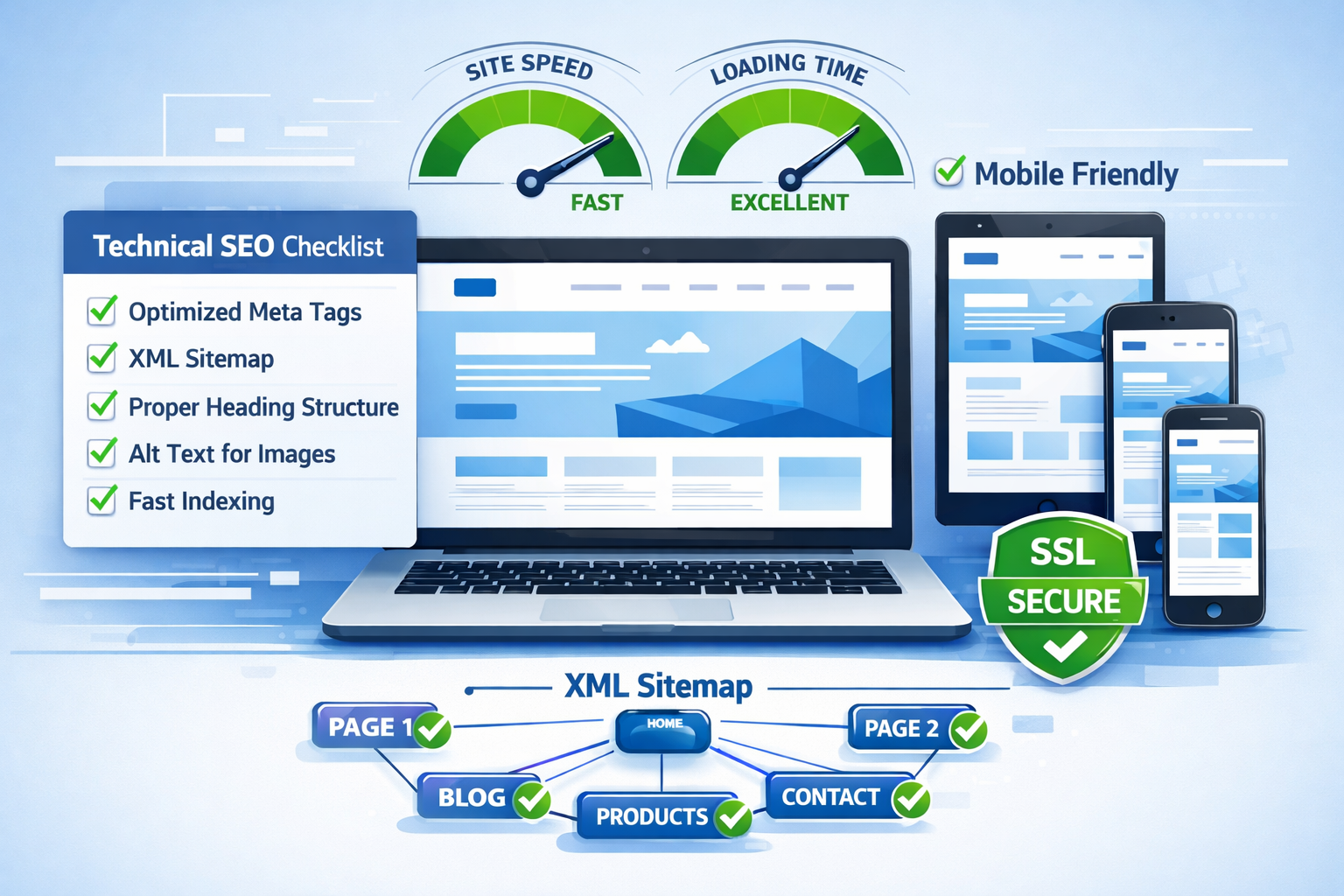
• Install an SSL certificate (HTTPS) for security and trust signals
• Submit your XML sitemap to Google Search Console
• Set up Google Analytics 4 for performance tracking
• Ensure your website loads in under 3 seconds
• Verify mobile responsiveness across all devices
Keyword Research Basics:
Start with tools like Google Keyword Planner or Ubersuggest to find relevant search terms. Focus on long-tail keywords (3-5 words) that match your audience’s specific questions. For example, instead of targeting “shoes,” target “comfortable running shoes for flat feet.”
Content Foundation:
Create a content calendar with topics that address your audience’s problems. Each page should target one primary keyword and provide comprehensive answers. Include related questions and subtopics to capture more search traffic.
Common beginner mistake: Trying to rank for highly competitive keywords immediately. Start with less competitive, specific terms where you can realistically rank within 3-6 months.
How Do You Optimize Website Speed for Better SEO?
SEO Unique Articles and Backlinks: –> Blog SEO
Website speed directly impacts search rankings and user experience, with Google considering page speed as a ranking factor since 2010.
Image Optimization:
• Compress images using tools like TinyPNG or WebP format
• Use appropriate image dimensions (don’t upload 4K images for small thumbnails)
• Implement lazy loading for images below the fold
• Add descriptive alt text for accessibility and SEO
Technical Speed Improvements:
• Enable browser caching through your hosting provider
• Minimize HTTP requests by combining CSS and JavaScript files
• Use a Content Delivery Network (CDN) like Cloudflare
• Choose quality hosting with SSD storage and adequate bandwidth
Code Optimization:
Remove unnecessary plugins, minify CSS and JavaScript, and eliminate render-blocking resources. Use Google PageSpeed Insights to identify specific issues affecting your site’s performance.
Choose speed optimization if: Your website takes longer than 3 seconds to load, you’re losing visitors quickly, or Google Search Console shows Core Web Vitals issues.
What Content Strategies Work Best for Website SEO?
High-quality, user-focused content remains the cornerstone of effective SEO, but the approach has evolved significantly toward answering specific user questions.
Content Planning:
Research your audience’s questions using tools like AnswerThePublic or Google’s “People Also Ask” sections. Create comprehensive guides that cover topics thoroughly rather than multiple thin pages on similar subjects.
Content Structure:
• Use clear headings (H1, H2, H3) to organize information
• Include bullet points and numbered lists for readability
• Add a table of contents for longer articles
• Write meta descriptions that encourage clicks
Topic Authority:
Build expertise by covering related subtopics within your niche. If you write about digital marketing, also cover social media, email marketing, and analytics. This demonstrates topical authority to search engines.
Content Updates:
Refresh existing content regularly with new information, updated statistics, and current examples. Google favors fresh, accurate content over outdated information.
Edge case: Avoid keyword stuffing by focusing on natural language and user value. Modern search algorithms prioritize content that reads naturally and provides genuine value.
How Important Is Mobile Optimization for Website SEO?
Mobile optimization is critical for SEO success, as Google uses mobile-first indexing, meaning it primarily evaluates the mobile version of your website for ranking purposes.
Mobile-First Design Elements:
• Responsive design that adapts to all screen sizes
• Touch-friendly navigation with adequate button spacing
• Fast loading times on mobile networks
• Readable font sizes without zooming
• Optimized images that don’t slow down mobile loading
Technical Mobile Requirements:
Ensure your mobile site includes the same content as your desktop version. Google may not rank pages properly if important content only appears on desktop. Test your site using Google’s Mobile-Friendly Test tool.
Mobile User Experience:
• Simplify navigation menus for touch interaction
• Use larger, easily clickable buttons
• Minimize pop-ups that interfere with mobile browsing
• Implement accelerated mobile pages (AMP) for news or blog content
Performance Monitoring:
Track mobile-specific metrics in Google Analytics, including mobile bounce rates, session duration, and conversion rates. Mobile users often have different behavior patterns than desktop users.
Choose mobile optimization if: More than 50% of your traffic comes from mobile devices, your mobile bounce rate exceeds 70%, or you’re targeting local customers who search on-the-go.
Website SEO Audit Checklist
Check off completed items to track your SEO progress
Get started by checking off completed items above!
SEO Unique Articles and Backlinks: –> Blog SEO
What Local SEO Tips For Website Owners Should You Know?
Local SEO helps businesses attract customers in their geographic area and is essential for any business with a physical location or service area.
Google Business Profile Optimization:
Claim and verify your Google Business Profile with accurate business information, including name, address, phone number, and business hours. Add high-quality photos of your location, products, or services. Encourage satisfied customers to leave reviews and respond professionally to all reviews.
Local Content Strategy:
Create location-specific pages for each area you serve. Include local landmarks, neighborhood names, and regional information that demonstrates your connection to the community. Write about local events, partnerships, or community involvement.
Citation Building:
Ensure your business information appears consistently across online directories like Yelp, Yellow Pages, and industry-specific platforms. Inconsistent information (different phone numbers or addresses) can hurt local rankings.
Local Link Building:
Partner with other local businesses, sponsor community events, or join local business associations to earn relevant local backlinks. These connections signal to Google that you’re an established part of the local business community.
Common mistake: Neglecting to optimize for “near me” searches. Include phrases like “near me,” your city name, and surrounding areas in your content naturally.
How Do You Track and Measure Website SEO Success?
Measuring SEO performance requires tracking multiple metrics that indicate both search engine visibility and user engagement improvements.
Essential SEO Metrics:
• Organic traffic growth from Google Analytics
• Keyword ranking positions for target terms
• Click-through rates from search results
• Average session duration and bounce rate
• Conversion rates from organic traffic
Google Search Console Data:
Monitor your website’s search performance, including impressions, clicks, and average position for specific queries. Use this data to identify which keywords drive traffic and which pages need improvement.
Content Performance Tracking:
Track which pages generate the most organic traffic and conversions. Identify top-performing content to understand what resonates with your audience and replicate successful elements in new content.
Technical SEO Monitoring:
Regularly check Core Web Vitals, crawl errors, and mobile usability issues in Google Search Console. Set up alerts for critical issues that could impact your search rankings.
Monthly Reporting:
Create monthly reports comparing current performance to previous periods. Track progress toward specific goals like increasing organic traffic by 20% or ranking in the top 3 for target keywords.
Choose comprehensive tracking if: You’re serious about SEO growth, managing multiple websites, or need to demonstrate ROI to stakeholders.
What Are Common SEO Mistakes to Avoid on Your Website?
Understanding common SEO mistakes helps website owners avoid practices that can harm their search rankings and waste valuable time and resources.
Technical Mistakes:
• Using duplicate content across multiple pages
• Neglecting image optimization and alt text
• Creating slow-loading pages with large file sizes
• Ignoring mobile optimization and responsive design
• Forgetting to set up proper URL redirects
Content-Related Errors:
Keyword stuffing remains a common mistake where website owners unnaturally repeat keywords throughout their content. Focus on writing for users first, incorporating keywords naturally within valuable, comprehensive content.
Link Building Mistakes:
Avoid purchasing low-quality backlinks or participating in link schemes. Instead, focus on earning links through high-quality content, guest posting on reputable sites, and building genuine business relationships.
Analytics Oversights:
Many website owners install Google Analytics but never review the data or act on insights. Regular monitoring helps identify issues early and opportunities for improvement.
Impatience with Results:
SEO typically takes 3-6 months to show significant results. Constantly changing strategies or expecting immediate results often leads to inconsistent implementation and poor outcomes.
Edge case: Be careful with SEO plugins that promise automatic optimization. While tools like Yoast SEO provide helpful guidance, they can’t replace strategic thinking and quality content creation.
FAQ
How long does it take to see SEO results for a website?
Most websites see initial SEO improvements within 3-6 months of consistent optimization efforts. Competitive industries may take 6-12 months to achieve significant ranking improvements.
What’s the most important SEO factor for websites in 2026?
Content quality and user experience are the most critical factors, followed closely by technical SEO fundamentals like site speed and mobile optimization.
How often should I update my website’s SEO?
Review and update your SEO strategy monthly, with major content updates quarterly. Technical SEO should be monitored continuously through automated tools.
Do I need to hire an SEO expert for my website?
Small businesses can handle basic SEO themselves using guides and tools. Consider hiring experts for competitive industries or complex technical issues.
What’s the difference between on-page and off-page SEO?
On-page SEO involves optimizing elements on your website (content, technical setup), while off-page SEO focuses on external factors like backlinks and social signals.
How many keywords should I target per page?
Focus on one primary keyword and 2-3 related secondary keywords per page. This approach allows for comprehensive coverage without keyword stuffing.
Is local SEO important for online-only businesses?
Local SEO is most valuable for businesses serving specific geographic areas. Online-only businesses should focus on broader SEO strategies unless targeting specific regions.
What’s the best way to research keywords for my website?
Start with Google Keyword Planner, then use tools like Ubersuggest or SEMrush to find long-tail variations. Analyze competitor keywords and search your own industry terms to understand user intent.
How important are backlinks for website SEO?
Backlinks remain important ranking factors, but quality matters more than quantity. Focus on earning links from relevant, authoritative websites in your industry.
Should I optimize for voice search on my website?
Voice search optimization involves targeting conversational, question-based keywords. Include FAQ sections and natural language content to capture voice search traffic.
What technical SEO issues should I prioritize first?
Start with site speed optimization, mobile responsiveness, and SSL certificate installation. These foundational elements impact both user experience and search rankings.
How do I know if my website SEO is working?
Monitor organic traffic growth, keyword ranking improvements, and conversion rates from search traffic. Use Google Analytics and Search Console for comprehensive performance tracking.
SEO Unique Articles and Backlinks: –> Blog SEO
Conclusion
Implementing effective SEO Tips For Website success requires a systematic approach that balances technical optimization, quality content creation, and user experience improvements.
Start with the foundational elements, ensure your website loads quickly, works perfectly on mobile devices, and provides clear navigation for users and search engines alike.
Focus your content strategy on answering your audience’s specific questions while naturally incorporating relevant keywords.
Remember that SEO is a long-term investment that typically shows results within 3-6 months of consistent effort.
Track your progress using Google Analytics and Search Console to identify what’s working and where improvements are needed.
Your next steps:
- Complete a technical SEO audit using the checklist above
- Research and target 5-10 long-tail keywords relevant to your business
- Create a content calendar addressing your audience’s most common questions
- Set up proper analytics tracking to measure your progress
- Schedule monthly reviews to assess performance and adjust strategies
Success in SEO comes from consistent implementation of proven strategies rather than chasing quick fixes or algorithm tricks.
Focus on creating genuine value for your users, and search engine rankings will follow naturally.
SEO Unique Articles and Backlinks: –> Blog SEO