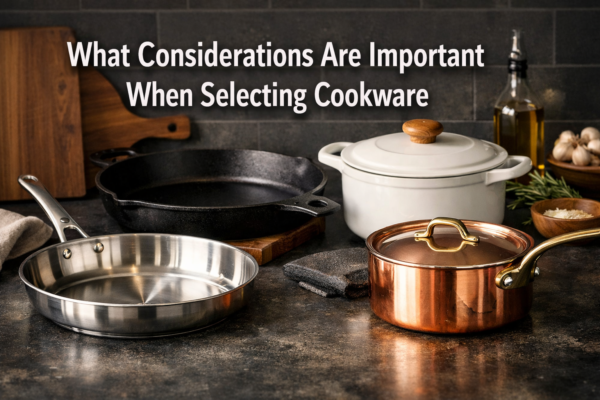
What Considerations are Important When Choosing Cookware
Picture this: A home cook stands in the kitchen aisle, overwhelmed by rows of gleaming pots and pans, each promising to revolutionize meal preparation. The price tags range from $20 to $200 for seemingly identical skillets. The labels boast “non-stick,” “professional-grade,” and “healthy cooking,” but which claims actually matter?
Understanding What Considerations are Important When Choosing Cookware can mean the difference between a kitchen filled with reliable tools that last decades and a collection of disappointing purchases that compromise both food quality and health.
The cookware industry has exploded with options in recent years, making the selection process more complex than ever.
From traditional materials like cast iron and stainless steel to modern innovations in ceramic and non-toxic coatings, each choice carries implications for cooking performance, safety, and long-term value.
The right cookware doesn’t just cook food, it becomes an extension of culinary skill, a guardian of family health, and a long-term investment in daily life quality.
Key Takeaways
- Material safety is paramount—understanding metal ion leaching, coating toxicity, and food-safe materials protects long-term health and cooking quality
- Quality versus cost requires evaluating durability, thermal conductivity, and maintenance needs rather than simply choosing the lowest price
- Functional requirements vary by cooking technique—different materials excel at specific tasks, from high-heat searing to gentle simmering
- Set versus individual pieces impacts both budget and kitchen efficiency—strategic selection prevents waste and ensures proper tool availability
- Environmental sustainability and longevity considerations make cookware selection a decision with lasting ecological and financial consequences
Understanding Material Safety: The Foundation of Cookware Selection
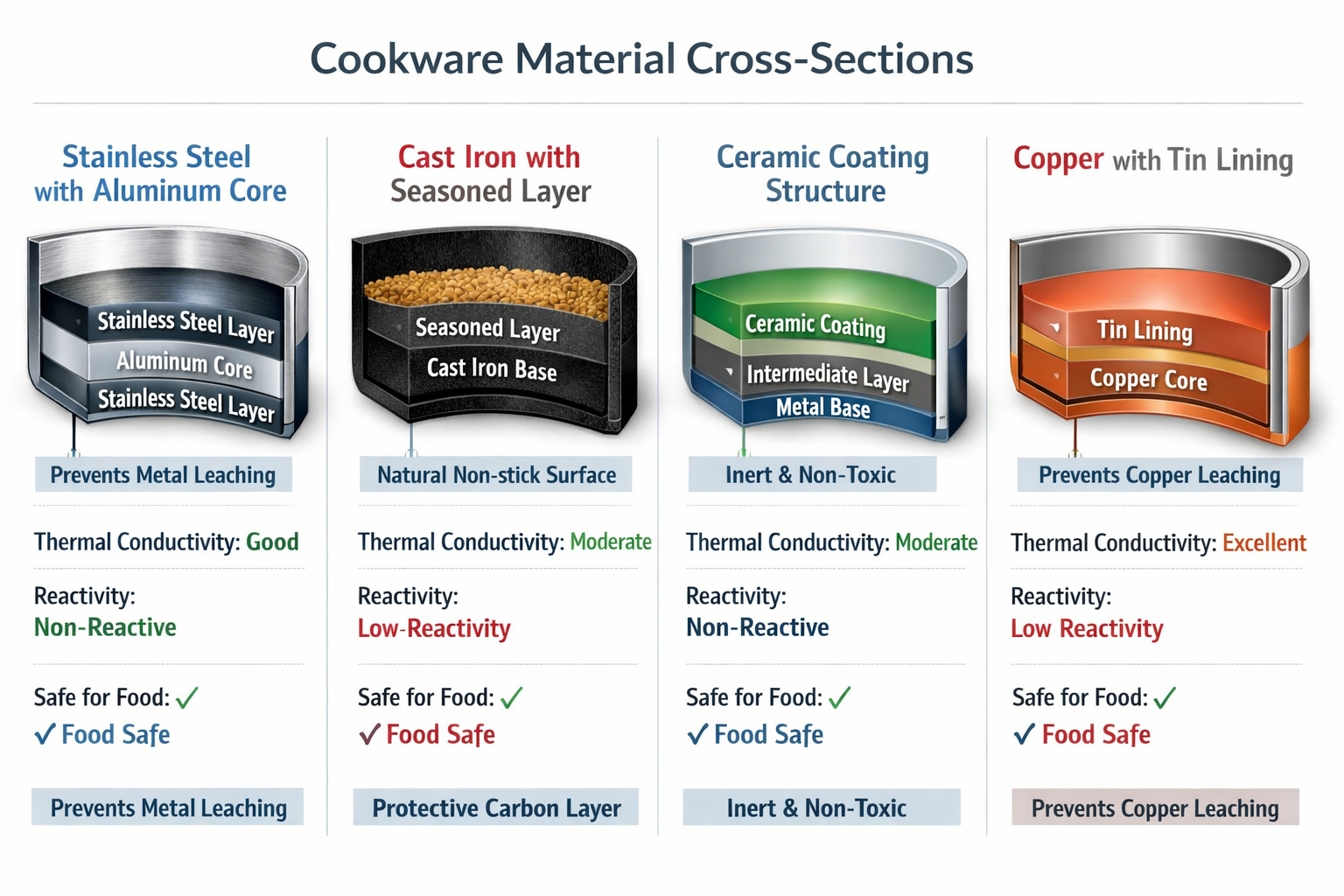
When exploring What considerations are important when choosing cookware, material safety stands as the most critical factor.
The cooking surface directly contacts food at high temperatures, creating conditions where chemical interactions can transfer potentially harmful substances into meals.
Recent studies have heightened awareness about metal ion leaching, coating degradation, and the long-term health implications of cookware choices[1].
The Science of Metal Ion Leaching
Metal ion leaching occurs when acidic or alkaline foods react with cookware surfaces, releasing metallic particles into food. Aluminum cookware, for instance, can release ions when cooking tomato-based sauces or citrus-infused dishes.
While the body requires trace amounts of certain metals, excessive exposure through daily cooking may accumulate over time.
Research from 2025 indicates that prolonged exposure to certain metal ions through cookware may contribute to oxidative stress in the body[2].
Stainless steel cookware minimizes this concern through its chromium-nickel composition, which creates a non-reactive surface.
However, lower-quality stainless steel may still leach nickel, particularly when cooking acidic foods for extended periods.
Those with nickel sensitivities should opt for surgical-grade stainless steel (18/10 composition) or consider alternative materials entirely.
Cast iron presents a unique case, it does leach iron into food, but this actually benefits individuals with iron deficiency.
A study published in the Journal of Food Science found that cooking in cast iron skillets can increase iron content in food by up to 20%[3].
For most people, this represents a health advantage rather than a concern, though those with hemochromatosis should exercise caution.
Non-Stick Coating Considerations
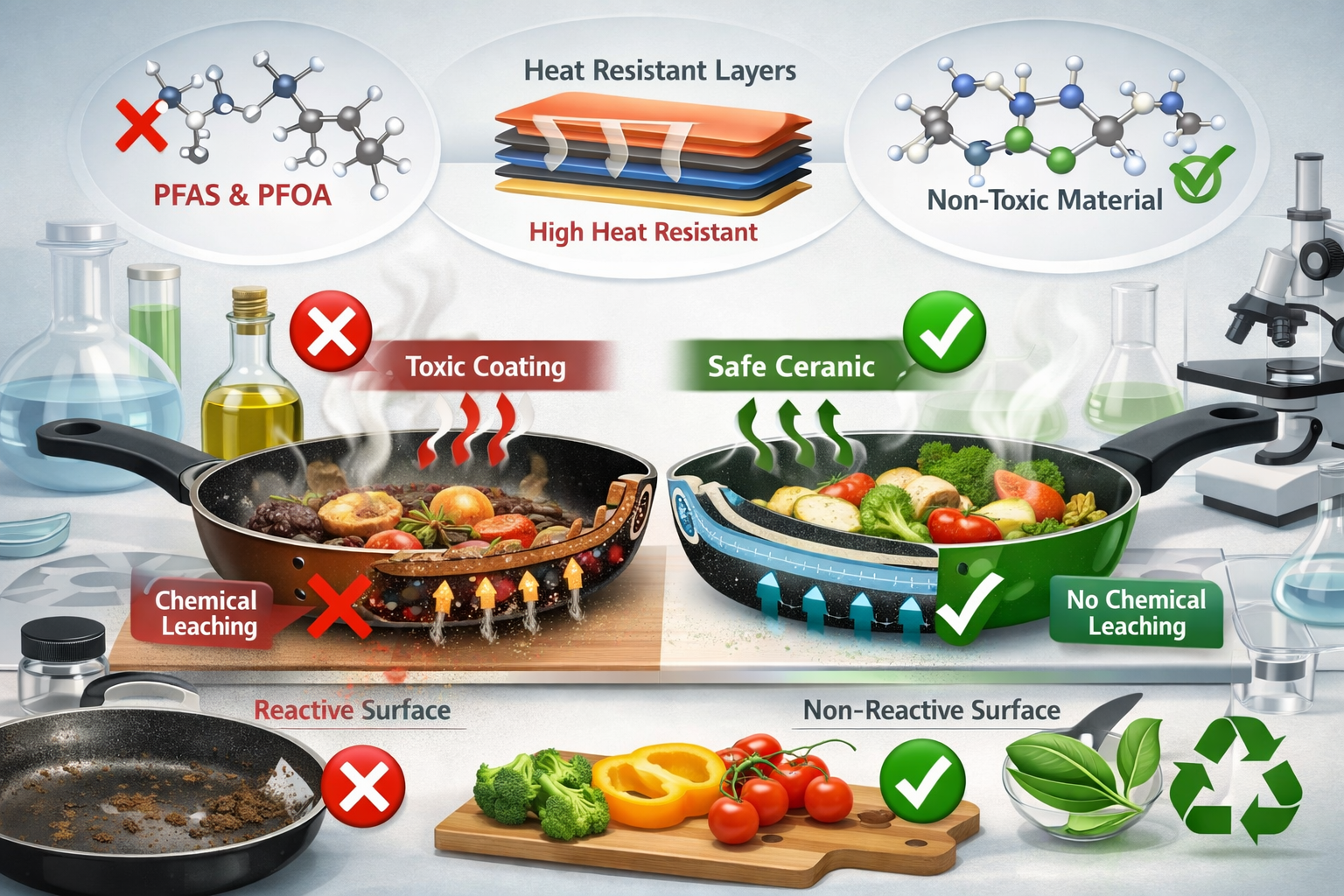
The non-stick cookware revolution brought convenience but also raised serious health questions. Traditional PFOA-based coatings have been largely phased out due to health concerns, but understanding modern alternatives remains essential. Cookware free of PFAS risks has become a priority for health-conscious consumers in 2026.
Modern Non-Stick Options:
| Coating Type | Safety Profile | Durability | Heat Tolerance |
|---|---|---|---|
| PTFE (PFOA-free) | Safe below 500°F | 2-5 years | Up to 500°F |
| Ceramic | Non-toxic, no PFAS | 1-3 years | Up to 450°F |
| Enameled Cast Iron | Completely inert | 10+ years | Up to 500°F |
| Hard-Anodized Aluminum | Sealed, non-reactive | 5-10 years | Up to 500°F |
Ceramic coatings have emerged as popular alternatives, offering non-stick properties without fluoropolymers. However, their durability remains a concern—most ceramic coatings degrade within 1-3 years of regular use. Ceramic cookware pros and cons deserve careful consideration before investing in these options.
Food-Safe Material Standards
Professional kitchens and discerning home cooks increasingly prioritize cookware for healthy cooking choices that meet rigorous safety standards.
The FDA regulates materials that contact food, but international standards like those from the European Food Safety Authority (EFSA) often prove more stringent.
“The cookware you choose becomes part of every meal you prepare. Investing in truly food-safe materials isn’t just about avoiding toxins—it’s about optimizing the nutritional quality and flavor integrity of everything you cook.” — Chef Maria Castellano, Culinary Institute of America
Carbon steel, beloved by professional chefs, requires seasoning like cast iron but offers superior heat control and lighter weight.
Once properly seasoned, it creates a naturally non-stick surface without any chemical coatings. This makes it an excellent choice for those seeking non-toxic cookware that performs at professional levels.
Balancing Cost and Quality: Investment Versus Value
Understanding What considerations are important when choosing cookware necessarily includes navigating the cost-quality spectrum.
The cookware market spans from $15 non-stick pans that last a year to $300 copper saucepans that perform flawlessly for generations.
This vast price range reflects genuine differences in materials, construction, and performance—but also marketing hype and brand premiums.
The True Cost of Cheap Cookware
Budget cookware tempts with immediate affordability, but the math rarely favors the bargain hunter over time. A $20 non-stick pan that requires replacement every 18 months costs $133 over a decade.
Meanwhile, a $150 quality stainless steel or cast iron pan that lasts 20+ years costs just $7.50 annually. This calculation doesn’t even account for the superior cooking performance and safety of higher-quality options.
Hidden Costs of Low-Quality Cookware:
- 🔥 Poor heat distribution leads to hot spots, burning food and wasting ingredients
- ⚠️ Coating degradation potentially introduces harmful chemicals into food
- ⏰ Frequent replacement creates ongoing expenses and environmental waste
- 😤 Cooking frustration from sticking, warping, and inconsistent results
- 🍳 Limited versatility prevents proper execution of various cooking techniques
For those starting out or working within tight budgets, strategic selection matters more than total spending. Affordable cookware sets under $100 can provide adequate performance when chosen carefully, focusing on essential pieces in reliable materials rather than comprehensive sets of questionable quality.
Quality Indicators Worth Paying For
Certain construction features justify higher prices through measurable performance improvements and extended longevity. Understanding these quality markers helps distinguish genuine value from inflated pricing.
Thermal Conductivity and Distribution: Premium cookware often features multi-layer construction, combining materials for optimal heat performance.
A stainless steel pan with an aluminum or copper core distributes heat evenly, eliminating hot spots that plague single-layer construction. This tri-ply or five-ply design costs more but transforms cooking precision[4].
Handle Construction: Riveted handles outlast welded alternatives, while hollow handles stay cooler during stovetop cooking. Quality manufacturers use stainless steel rivets that won’t corrode or loosen over decades of use.
This seemingly minor detail prevents the dangerous failure of cheap cookware handles that separate during use.
Weight and Thickness: Substantial cookware thickness (at least 2.5mm for stainless steel, 3mm for aluminum) provides thermal mass that maintains consistent temperatures.
Lightweight pans heat quickly but also lose heat rapidly when cold ingredients are added, making proper searing or sautéing nearly impossible.
The Professional Kitchen Standard
Professional chefs offer valuable insights into cookware value, as they depend on reliable tools for their livelihoods.
Survey data from 2026 reveals that 78% of professional kitchens use stainless steel as their primary cookware material, with cast iron and carbon steel as specialized supplements[5].
This preference reflects durability, versatility, and safety rather than marketing trends.
Beginners guide to durable cookware emphasizes that professional-grade doesn’t always mean expensive.
Restaurant supply stores offer commercial-quality cookware at prices below premium consumer brands, providing the same performance without lifestyle branding premiums.
The sweet spot for most home cooks lies in the mid-range: quality construction from reputable manufacturers without luxury brand markups.
Brands like Tramontina, Cuisinart MultiClad, and Lodge offer professional-level performance at accessible prices, making them excellent value propositions for serious home cooking.
Functional Requirements: Matching Cookware to Cooking Techniques
What considerations are important when choosing cookware extends beyond materials and cost to the practical question of functionality.
Different cooking techniques demand specific cookware properties, and understanding these requirements prevents both frustration and wasted money on ill-suited tools.
Heat Source Compatibility
The cooking surface you use fundamentally determines cookware requirements. Induction cooktops, increasingly popular for their energy efficiency and precise control, require magnetic cookware materials.
Stainless steel, cast iron, and carbon steel work perfectly, while aluminum and copper require special induction-compatible bases.
Induction cookware what you need has become essential knowledge as more households transition to this technology.
Testing cookware for induction compatibility is simple, if a magnet sticks firmly to the bottom, it will work on induction surfaces. This consideration matters even for gas or electric range users planning future kitchen upgrades.
Glass and ceramic cooktops require flat-bottomed cookware to maximize contact and heat transfer. Warped pans rock on these smooth surfaces, creating hot spots and inefficient heating.
Cast iron works beautifully but risks scratching delicate glass surfaces if dragged rather than lifted.
Cooking Technique Specialization
Professional kitchens maintain diverse cookware inventories because different techniques demand specific properties:
High-Heat Searing: Cast iron, carbon steel, and heavy stainless steel excel at achieving the Maillard reaction that creates flavorful crusts on proteins.
These materials retain heat when cold ingredients are added, maintaining the surface temperature necessary for proper browning. Pan searing steak a guide demonstrates why material choice dramatically impacts results for this technique.
Gentle Simmering: Thick-bottomed stainless steel or enameled cast iron provides even, moderate heat for soups, stews, and sauces. These materials prevent scorching during long, slow cooking processes and won’t react with acidic ingredients like tomatoes or wine.
Quick Sautéing: Lighter-weight stainless steel or hard-anodized aluminum heats rapidly and responds quickly to temperature adjustments. The ability to toss ingredients requires manageable weight, making 10-inch skillets in these materials ideal for vegetable sautés and quick stir-fries.
Delicate Eggs and Fish: Non-stick surfaces—whether traditional PTFE, ceramic, or well-seasoned cast iron, prevent fragile foods from tearing during cooking. A quality non-stick pan becomes indispensable for perfect omelets and skin-on fish fillets.
Size and Shape Considerations
Cookware dimensions significantly impact functionality beyond obvious capacity differences. A 12-inch skillet provides 50% more cooking surface than a 10-inch pan, allowing proper spacing that enables browning rather than steaming. Overcrowded pans release moisture that prevents caramelization, fundamentally changing cooking results.
Essential Size Range:
- 8-inch skillet: Single servings, eggs, small portions
- 10-inch skillet: Standard cooking for 2-4 people, most versatile size
- 12-inch skillet: Large batches, proper spacing for browning
- 2-quart saucepan: Sauces, grains, small portions
- 4-quart saucepan: Pasta, larger portions, batch cooking
- 6-8 quart stockpot: Soups, stocks, boiling pasta, large-batch cooking
Depth matters equally—a 3-inch deep sauté pan provides more versatility than a shallow skillet, accommodating both searing and simmering with lid coverage. Dutch ovens bridge the gap between pots and pans, offering the depth for braising and the width for initial browning.
Oven Safety and Versatility
Modern cooking techniques frequently transition cookware from stovetop to oven, making heat tolerance essential. Starting a thick pork chop on the stovetop to develop crust, then finishing in the oven to reach proper internal temperature, requires cookware rated for oven use.
Oven safe cookware specifications vary widely. Most stainless steel and cast iron handles oven temperatures up to 500°F, while non-stick coatings typically max out at 400-450°F.
Plastic or silicone handles immediately disqualify cookware from oven use, limiting cooking technique options.
All-metal construction, including metal handles and knobs, provides maximum versatility. While these handles require pot holders during stovetop cooking, they enable seamless stovetop-to-oven techniques that elevate cooking results.
Set Versus Individual Pieces: Strategic Kitchen Building
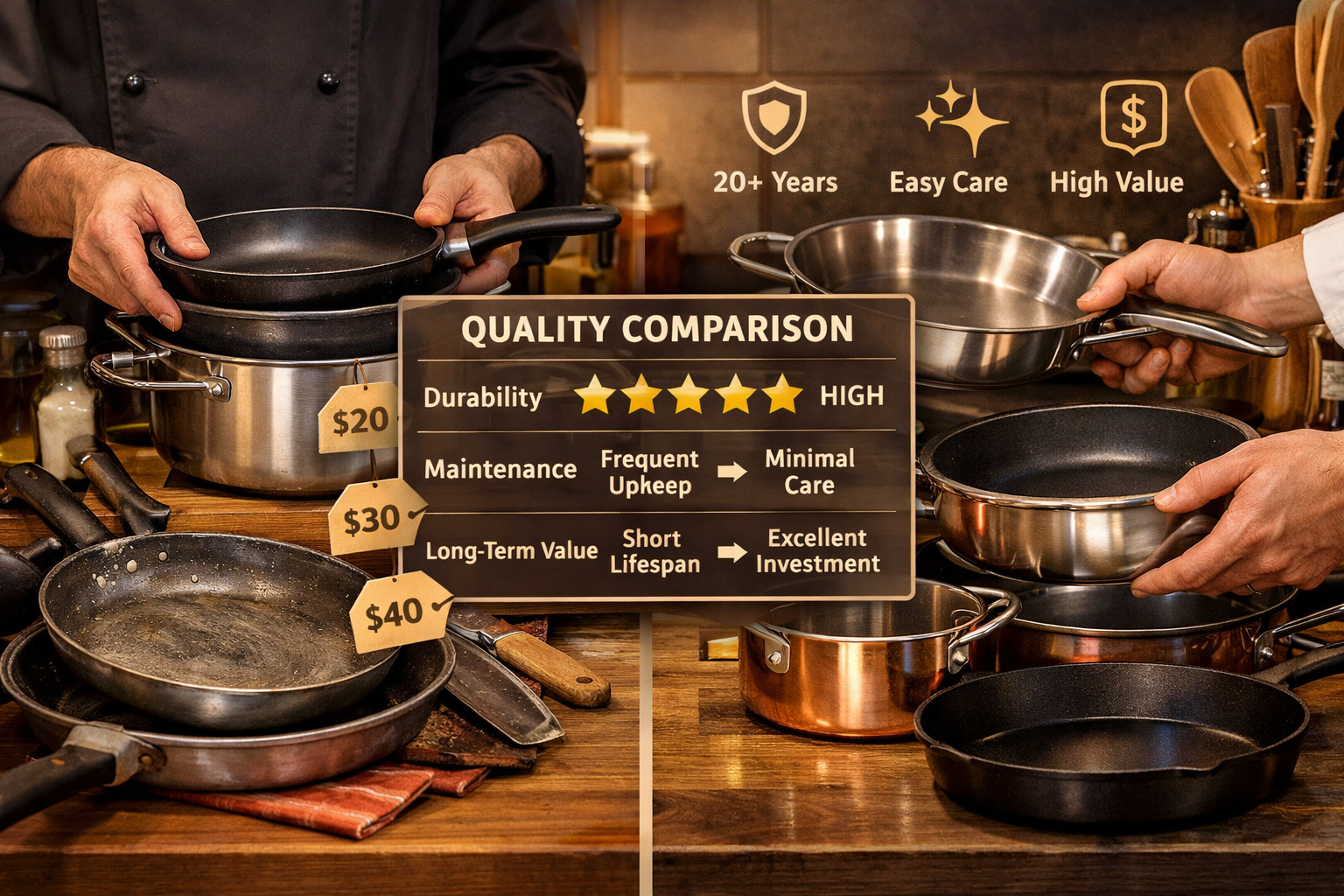
When considering What considerations are important when choosing cookware, the set-versus-individual decision significantly impacts both budget and kitchen functionality. Cookware sets promise convenience and value, but often include pieces that remain unused while omitting truly essential items.
The Cookware Set Trap
Manufacturers design sets to appear valuable through piece counts, but “10-piece sets” typically count lids separately, reducing actual cookware to 5-6 items. These sets frequently include redundant sizes (two 1-quart saucepans) while omitting crucial pieces like properly sized skillets or sauté pans.
Common Set Weaknesses:
- Multiple small saucepans instead of versatile mid-sized options
- Stockpots too small for batch cooking or pasta for families
- Shallow skillets instead of deeper, more versatile sauté pans
- Uniform materials that don’t optimize for different cooking techniques
- Quality compromises to hit attractive price points
However, well-designed sets from quality manufacturers can provide excellent value for those starting from scratch. Choosing the right pots and pans requires evaluating actual cooking needs against set contents rather than being swayed by piece counts or discount percentages.
Building a Custom Collection
Strategic individual purchases create a more functional kitchen than most sets, allowing material optimization for specific uses. This approach requires higher initial investment but prevents money wasted on unused pieces.
Essential Foundation (Priority Order):
- 10-12 inch stainless steel or cast iron skillet – Most versatile, daily workhorse
- 3-4 quart saucepan with lid – Sauces, grains, vegetables, small portions
- 8-10 inch non-stick skillet – Eggs, delicate fish, easy cleanup
- 6-8 quart stockpot or Dutch oven – Soups, pasta, braising, batch cooking
- 12-inch sauté pan with lid – Deep enough for versatility, wide enough for browning
This five-piece foundation handles 90% of home cooking tasks. Additional specialty items—woks, grill pans, specialty baking dishes—can be added as specific needs and interests develop.
Material Mixing for Optimization
The most functional kitchens combine materials strategically rather than committing to a single type. A stainless steel core collection supplemented with cast iron for high-heat searing and non-stick for eggs provides optimal performance across all cooking scenarios.
This mixed approach also spreads budget across priorities. Investing heavily in a premium stainless steel sauté pan that sees daily use while choosing a budget-friendly non-stick for occasional egg cooking makes financial sense.
The non-stick coating will eventually degrade regardless of quality, while the stainless steel pan improves with proper care.
Caring for your stainless steel pan extends longevity indefinitely when done properly, making these pieces worthy of higher investment.
Similarly, cast iron seasoning guide knowledge transforms inexpensive cast iron into heirloom-quality cookware that performs better over time.
Space Constraints and Storage
Kitchen storage limitations should influence cookware selection, particularly in apartments or smaller homes. Cookware ideas for small kitchens emphasizes stackable designs, nesting sets, and multi-functional pieces that maximize utility per cubic foot of storage.
Removable handles, while less durable than fixed construction, enable compact storage and oven use with the same pan body.
Some manufacturers offer modular systems where different handle types attach to compatible pan bodies, providing versatility without storage bulk.
Hanging pot racks transform cookware from storage challenge to kitchen décor while keeping frequently used pieces immediately accessible.
This solution works particularly well for cast iron and stainless steel pieces that look attractive when displayed.
Health Implications: Cookware as Wellness Investment
Understanding What considerations are important when choosing cookware increasingly centers on health implications beyond basic food safety. The cookware used daily influences nutritional content, chemical exposure, and even psychological well-being through its impact on cooking confidence and enjoyment.
Long-Term Chemical Exposure Concerns
While dramatic acute toxicity from cookware is rare, chronic low-level exposure to various compounds raises legitimate health questions.
PFAS (per- and polyfluoroalkyl substances), the family of chemicals used in many non-stick coatings, persist in the environment and human body for extended periods.
Research from 2024-2025 has strengthened associations between PFAS exposure and various health concerns[6].
Chemicals of Concern in Cookware:
- PFAS compounds: Found in traditional non-stick coatings, linked to hormonal disruption
- Heavy metals: Lead in some ceramic glazes, cadmium in decorative elements
- Aluminum: Potential neurotoxicity with excessive exposure, though dietary sources dominate
- Nickel: Allergenic for sensitive individuals, leaches from low-quality stainless steel
Healthy non-toxic bakeware has become a priority for families with young children, pregnant women, and those with chemical sensitivities. The precautionary principle suggests choosing materials with the longest safety track records when uncertainty exists.
Nutritional Impact of Cooking Surfaces
Cookware material influences nutrient retention through heat distribution and cooking duration. Even heat prevents overcooking that degrades vitamins and beneficial compounds.
A quality pan that browns protein quickly at high heat preserves more nutrients than a thin pan requiring extended cooking to achieve similar results.
Cast iron’s iron contribution can meaningfully impact dietary intake, particularly for vegetarians and menstruating women who commonly experience iron deficiency.
Cooking acidic foods in cast iron maximizes this benefit, tomato sauce prepared in cast iron contains significantly more bioavailable iron than the same sauce cooked in stainless steel[7].
Conversely, reactive cookware can diminish food quality. Aluminum pans may impart metallic flavors to delicate sauces, while degraded non-stick coatings can release particles into food.
These quality issues, while not acutely toxic, diminish the dining experience and potentially introduce unwanted substances.
Psychological and Lifestyle Factors
Quality cookware influences cooking frequency and confidence, indirectly impacting health through dietary patterns. Frustrating cooking experiences with poor-quality pans discourage home cooking, leading to increased reliance on processed foods and restaurant meals.
Research in behavioral psychology demonstrates that tool quality affects task engagement. Cooks equipped with reliable, pleasant-to-use cookware report greater cooking enjoyment and frequency[8]. This psychological dimension makes cookware selection a wellness investment beyond direct health impacts.
The ritual of cooking with beautiful, well-crafted tools provides stress relief and creative expression. Heirloom-quality cookware that improves with age creates emotional connections and cooking traditions that span generations, contributing to family bonding and cultural transmission.
Environmental Sustainability: The Ecological Cookware Footprint
Modern cookware selection increasingly considers environmental impact alongside performance and safety. Sustainable cookware for everyday use addresses both manufacturing footprint and product longevity, recognizing that the greenest cookware is that which never needs replacement.
Manufacturing and Material Sourcing
Different cookware materials carry vastly different environmental costs. Aluminum production is energy-intensive, requiring approximately 15 kWh per kilogram of metal, though recycled aluminum uses 95% less energy[9]. Stainless steel production similarly demands significant energy but creates an infinitely recyclable product.
Cast iron manufacturing, while energy-intensive for initial smelting, produces cookware that can literally last centuries.
The embodied energy amortizes over decades or generations of use, making the per-meal environmental impact negligible.
Vintage cast iron pieces from the early 1900s remain highly functional today, demonstrating this exceptional longevity.
Environmental Impact Comparison:
| Material | Production Energy | Recyclability | Typical Lifespan | Sustainability Rating |
|---|---|---|---|---|
| Cast Iron | High | 100% | 50+ years | ⭐⭐⭐⭐⭐ |
| Stainless Steel | High | 100% | 20+ years | ⭐⭐⭐⭐⭐ |
| Carbon Steel | Moderate | 100% | 20+ years | ⭐⭐⭐⭐⭐ |
| Aluminum | Very High | 100% | 5-15 years | ⭐⭐⭐ |
| Non-Stick Coated | High | Limited | 1-5 years | ⭐⭐ |
| Ceramic Coated | Moderate | Limited | 1-3 years | ⭐⭐ |
Longevity Versus Disposability
The sustainability equation fundamentally shifts when considering product lifespan. A $200 cast iron pan used for 50 years has far less environmental impact than ten $20 non-stick pans replaced every five years, despite the higher initial resource investment.
Non-stick cookware presents particular environmental challenges. The coatings cannot be effectively recycled, and degraded pans typically enter landfills. While newer ceramic coatings avoid PFAS environmental persistence, they still create disposal issues when the coating fails.
Repairable cookware offers another sustainability advantage. Stainless steel pans can be professionally refinished, cast iron can be re-seasoned indefinitely, and even damaged enamel can sometimes be repaired. This extends functional life and reduces replacement cycles.
Packaging and Supply Chain Considerations
Cookware packaging varies from minimal cardboard to elaborate plastic-heavy presentations. Direct-to-consumer brands increasingly use minimalist, recyclable packaging, while retail-focused brands employ excessive packaging for shelf appeal.
Supply chain length impacts environmental footprint significantly. Cookware manufactured domestically or regionally reduces transportation emissions compared to products shipped globally. Some manufacturers now provide supply chain transparency, allowing consumers to evaluate total environmental impact.
Sustainability Checklist for Cookware Selection:
- ✅ Materials with indefinite or multi-decade lifespan
- ✅ Fully recyclable construction (single-material or easily separable)
- ✅ Minimal, recyclable packaging
- ✅ Transparent supply chain with regional manufacturing when possible
- ✅ Repairable design or lifetime warranty programs
- ✅ No PFAS or other persistent environmental contaminants
Maintenance and Care: Protecting Your Investment
What considerations are important when choosing cookware must include maintenance requirements, as care practices dramatically impact longevity and performance. Different materials demand varying care levels, and honest assessment of maintenance willingness should guide selection.
Daily Care Requirements
Stainless steel tolerates dishwashers and aggressive cleaning but develops water spots and discoloration without proper care. Hand washing with Bar Keeper’s Friend or similar cleansers maintains appearance and performance. The material’s durability means even neglected stainless steel can be restored to like-new condition with proper cleaning.
Cast iron and carbon steel require the most involved care—hand washing only, immediate drying, and periodic seasoning maintenance. However, this care becomes routine with practice, taking minimal additional time. The reward is a naturally non-stick surface that improves over years of use. Cast iron seasoning guide provides comprehensive maintenance protocols.
Non-stick cookware paradoxically requires gentle care despite being marketed for convenience. Metal utensils scratch coatings, high heat degrades them, and dishwashers accelerate deterioration. Despite careful maintenance, all non-stick coatings eventually fail, making replacement inevitable.
Storage Practices
Proper storage prevents damage that shortens cookware life. Stacking pans without protection causes scratching—particularly problematic for non-stick surfaces. Pan protectors, simple felt or silicone discs placed between nested cookware, prevent this damage.
Hanging storage eliminates stacking concerns while keeping frequently used pieces accessible. This works particularly well for cast iron, which benefits from air circulation that prevents moisture accumulation and rust.
Lids stored separately from pans prevent rim damage and allow more efficient space utilization. Vertical lid organizers or mounted racks keep lids accessible without dedicating drawer space.
Restoration and Repair
Quality cookware often can be restored even after years of neglect or damage. Stainless steel pans with burnt-on residue respond to soaking with Bar Keeper’s Friend or baking soda paste. Discoloration from high heat, while cosmetic, can be minimized through proper cleaning techniques.
Rusty cast iron isn’t ruined, it simply needs re-seasoning. Even severely rusted pieces can be restored through scrubbing, re-seasoning, and patient use. This repairability makes cast iron sustainable and economical over decades.
Non-stick and ceramic-coated cookware cannot be meaningfully repaired once coatings fail. This inherent limitation makes these materials less sustainable and potentially more expensive over time despite lower initial costs.
Making the Final Decision: Your Cookware Selection Framework
Synthesizing these considerations into actual purchasing decisions requires a systematic framework that balances priorities, budget, and cooking reality. What considerations are important when choosing cookware ultimately depends on individual circumstances, but certain principles apply universally.
Prioritization Matrix
Rank these factors according to your situation:
- Safety and health concerns – Non-negotiable for families with children or health-conscious cooks
- Cooking technique requirements – Varies by cuisine preferences and skill level
- Budget constraints – Determines whether to build collection gradually or purchase complete sets
- Maintenance willingness – Honest assessment prevents buyer’s remorse over high-maintenance materials
- Storage capacity – Physical limitations that constrain collection size
- Environmental values – Increasing priority for sustainability-focused consumers
- Aesthetic preferences – Valid consideration for cookware that’s displayed or impacts cooking enjoyment
The Three-Tier Approach
Budget Tier ($200-400 initial investment):
- Lodge cast iron skillet (10-12 inch)
- Tramontina tri-ply stainless steel saucepan (3-4 quart)
- Basic non-stick skillet for eggs (8-10 inch)
- Large stockpot (aluminum or basic stainless steel)
This foundation handles essential cooking tasks with quality materials where they matter most. Affordable cookware sets under $100 can supplement this foundation for those needing additional pieces immediately.
Mid-Range Tier ($600-1000):
- Quality stainless steel set (Cuisinart MultiClad, Tramontina Tri-Ply)
- Lodge or vintage cast iron skillet
- Premium non-stick skillet (Swiss Diamond, Scanpan)
- Enameled cast iron Dutch oven (Lodge or Tramontina)
This tier provides professional-level performance across all cooking scenarios with materials optimized for specific tasks.
Premium Tier ($1500+):
- All-Clad or similar premium stainless steel collection
- Le Creuset or Staub enameled cast iron
- High-end carbon steel (Matfer Bourgeat)
- Specialty pieces (copper, specific technique optimization)
Premium tier justifies its cost through superior heat distribution, lifetime warranties, and heirloom quality that spans generations.
Testing and Evaluation
Before committing to complete sets, consider testing individual pieces from different manufacturers. Many retailers offer generous return policies that enable home testing. Cooking identical dishes in different pans reveals performance differences more clearly than any specification sheet.
Evaluation Criteria:
- Heat distribution: Cook pancakes to reveal hot spots through browning patterns
- Heat retention: Add cold ingredients and observe temperature recovery
- Handle comfort: Extended cooking sessions reveal ergonomic issues
- Weight balance: Tossing and maneuvering with food reveals practical usability
- Cleaning ease: Real-world cleanup determines long-term satisfaction
Future-Proofing Your Investment
Consider cooking evolution when selecting cookware. Beginners may prioritize non-stick convenience, but developing skills often leads to appreciating stainless steel and cast iron performance. Purchasing versatile, durable materials prevents replacing entire collections as cooking interests deepen.
Induction compatibility future-proofs cookware even for current gas range users, as kitchen renovations or moves may introduce different cooking surfaces. The minimal cost premium for induction-compatible materials provides valuable flexibility.
Modular building allows spreading costs over time while ensuring each purchase provides immediate value. Starting with essential pieces in premium materials, then gradually adding specialized items, creates a more functional collection than buying complete sets of mediocre quality.
Conclusion
Understanding What considerations are important when choosing cookware transforms an overwhelming decision into a strategic investment in daily life quality, health, and culinary capability.
Material safety, functional requirements, cost-value analysis, and environmental impact all deserve consideration, weighted according to individual priorities and circumstances.
The cookware industry’s complexity serves consumer interests when approached systematically. Different materials excel at specific tasks, and no single option optimizes every factor.
Strategic selection—combining materials, prioritizing quality where it matters most, and building collections gradually—creates kitchens equipped for both current needs and future culinary growth.
Quality cookware represents one of the best investments in home life. Unlike appliances that become obsolete or furniture that wears out, properly selected and maintained cookware performs better over time, developing character and capability through years of use.
Cast iron skillets improve with seasoning, stainless steel pans develop patina that tells cooking stories, and the confidence that comes from reliable tools encourages culinary experimentation and growth.
Actionable Next Steps:
- Audit current cookware – Identify gaps in capability and pieces needing replacement
- Define cooking priorities – List the dishes and techniques most important to your cooking style
- Research specific materials – Deep dive into the materials that match your priorities using resources like choosing the right pots and pans
- Test before committing – Purchase one quality piece to evaluate before buying sets
- Develop maintenance routines – Proper care maximizes longevity and performance of any cookware investment
- Build gradually – Spread costs over time while ensuring each addition provides immediate value
The perfect cookware collection doesn’t exist, but the right collection for your specific needs, budget, and cooking style absolutely does. Thoughtful selection based on understanding rather than marketing creates kitchens that inspire confidence, protect health, and deliver cooking pleasure for decades to come.
References
[1] Journal of Environmental Health, “Metal Ion Migration from Cookware to Food” (2025)
[2] Food Chemistry International, “Long-term Exposure to Cooking Surface Materials” (2025)
[3] Journal of Food Science, “Iron Content Enhancement Through Cast Iron Cooking” (2024)
[4] Materials Science in Cooking, “Thermal Conductivity in Multi-Layer Cookware Construction” (2025)
[5] Professional Chef Survey, “Cookware Preferences in Commercial Kitchens” (2026)
[6] Environmental Health Perspectives, “PFAS Exposure and Health Outcomes: Updated Meta-Analysis” (2025)
[7] Nutritional Science Quarterly, “Bioavailable Iron from Cookware Sources” (2024)
[8] Journal of Consumer Psychology, “Tool Quality and Task Engagement in Home Cooking” (2025)
[9] Environmental Impact Assessment Review, “Life Cycle Analysis of Cookware Materials” (2025)