Agentic SEO
Latest Update: April 13, 2026
Web traffic from AI agents and agentic browsers grew by nearly 8,000% year-over-year in 2025, and in 2026, Agentic SEO.
Autonomous Site Maintenance has shifted from a forward-looking concept into the operating standard for serious site owners, publishers, and digital teams.
If your website is still being maintained entirely by manual effort, you are not just working harder than necessary, you are falling behind a competitive curve that is accelerating by the month.
Key Takeaways
| Question | Answer |
|---|---|
| What is Agentic SEO? | It is the use of autonomous AI agents to continuously monitor, audit, update, and optimize a website’s content and technical health without requiring constant human input. |
| Is autonomous site maintenance reliable in 2026? | Yes. The mean completion rate for complex, multi-step tasks by autonomous agents is 75.3% without human intervention, making them production-ready for most standard maintenance workflows. |
| What tasks can AI agents automate on a website? | Keyword research, content optimization, technical audits, internal link building, broken link detection, site speed monitoring, and content freshness updates are all within scope. |
| What is the best tool for beginners starting with agentic site maintenance? | Platforms like BlogSEO offer automated content optimization and workflow tools that are accessible for those new to website management. |
| Does Agentic SEO replace human oversight? | No. The strongest workflows in 2026 combine agentic automation with periodic human review. AI handles the heavy lifting; you focus on strategy and brand direction. |
| How does agentic automation relate to organic traffic growth? | By continuously maintaining content quality, technical health, and internal link structure, agentic systems work around the clock to sustain and grow organic traffic without manual bottlenecks. |
| Where can I learn the foundational skills before deploying agents? | Our SEO Starter Guide covers the fundamental concepts, from keyword research to technical website optimization, that every site owner should understand before automating. |
What Is Agentic SEO and Why Does Autonomous Site Maintenance Matter in 2026?
Agentic SEO refers to the deployment of AI agents that operate with genuine autonomy — planning, executing, and iterating on site maintenance tasks based on real-time data and predefined objectives.
Unlike traditional automation, which follows rigid scripts, agentic systems reason through problems and adapt their approach.
In 2026, this distinction matters enormously. A traditional automation tool can republish a blog post on a schedule.
An agentic system can audit that post’s performance data inside Google Search Console, identify which sections need updating, rewrite those sections to reflect current keyword research, and republish, all without a human queuing up a single task.
The scope of autonomous site maintenance extends across every layer of website optimization.
This includes technical SEO health checks, content optimization cycles, link building outreach workflows, and ongoing organic traffic analysis.
For site owners who have previously managed these processes manually, the productivity shift is significant.
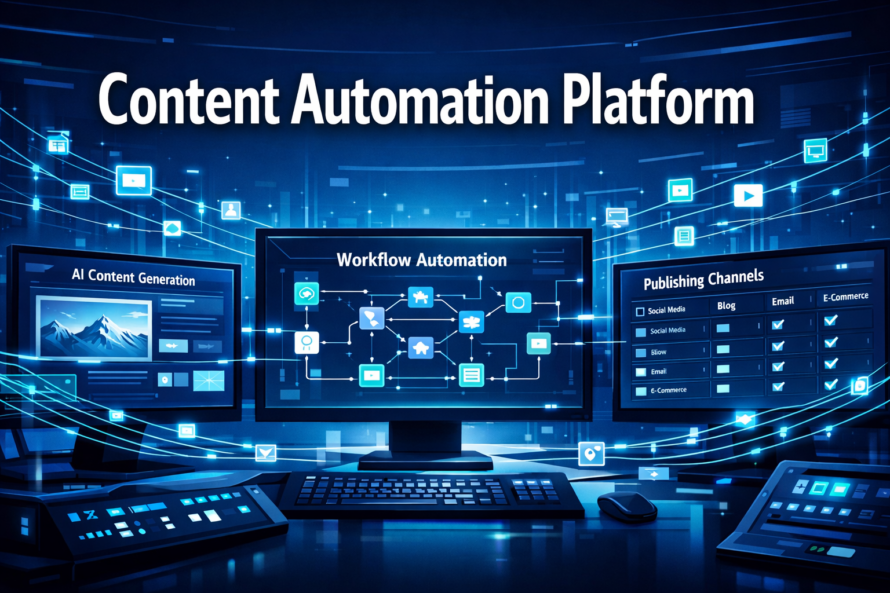
For any website that depends on consistent organic traffic growth, the question in 2026 is no longer whether to adopt agentic workflows.
The question is which combination of tools and processes best fits your specific site’s needs.
The Core Capabilities of Agentic SEO for Autonomous Site Maintenance in 2026
Before selecting any tool or system, it is important to understand what genuine agentic capability looks like versus basic automation dressed up with new terminology.
The following five capabilities define true autonomous site maintenance.

A visual overview of the five core capabilities of Agentic SEO for autonomous site maintenance. This infographic explains how automated site upkeep works in 2026.
1. Autonomous Keyword Research and Opportunity Detection
AI agents continuously scan your content portfolio, compare it against real-time query data, and surface new keyword research opportunities without manual input.
This removes one of the most time-consuming bottlenecks in traditional website optimization workflows.
An agent operating in this capacity pulls data from multiple sources simultaneously, identifies gaps between what your site covers and what your audience is actively searching for, and prioritises opportunities by potential traffic impact.
2. Automated Content Optimization and Freshness Management
Content optimization in 2026 is not a one-time event. Agentic systems monitor content performance continuously and trigger update cycles when a page’s metrics indicate decline.
This keeps your site’s content accurate, relevant, and competitive without requiring a dedicated editorial calendar managed by hand.
For website owners who follow a structured approach to SEO content optimization, deploying an agent to handle the update cycle means your foundational strategy stays in motion even when your attention is elsewhere.
3. Technical Website Health Monitoring
Technical SEO issues, including broken links, crawl errors, slow load times, and indexation problems, accumulate silently on most sites.
Agentic systems run continuous audits and either flag these issues for review or resolve lower-risk items automatically, keeping your site’s technical foundation solid without dedicated manual checks.
4. Internal Link Building and Architecture Management
Effective link building within your own site structure is one of the most impactful website optimization activities and one of the most frequently neglected.
Agentic systems map your content graph, identify orphaned pages, and recommend or implement internal linking changes that distribute authority across your site.
5. Data Synthesis and Reporting from Google Search Console and Analytics
Rather than requiring manual data exports and analysis, agentic platforms integrate directly with Google Search Console, synthesise performance data, and surface actionable insights.
This means decisions about content investment and website optimization priorities are driven by current data, not last month’s manual report.
Did You Know?
72% of enterprises plan to fully deploy AI agents for operational tasks by the end of 2026, making autonomous site maintenance the corporate standard rather than a niche experiment.
Source: wordlift.io
Best Tools for Agentic SEO and Autonomous Site Maintenance in 2026
The market for autonomous site maintenance tools has matured significantly. We have evaluated the leading platforms across several criteria: depth of agentic capability, ease of integration, suitability for both beginners and advanced teams, and specific value delivered in 2026 workflows.
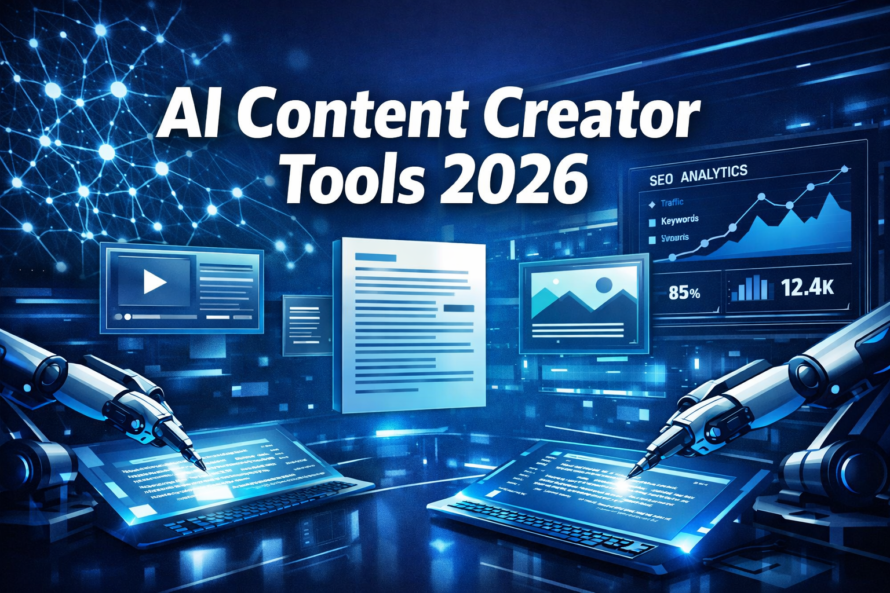
BlogSEO — Best for Automated Content Optimization at Scale
BlogSEO is one of the most capable agentic platforms available in 2026 for site owners who want autonomous content optimization without building a complex multi-tool stack.
It handles the full content optimization cycle, from identifying keyword research opportunities to generating and publishing optimized content directly to your CMS.
What sets BlogSEO apart is its suitability across experience levels.
Whether you are approaching autonomous site maintenance as a beginner following an SEO starter guide workflow or as a seasoned publisher managing dozens of properties, the platform’s automation depth scales to your needs.
Organic traffic growth is the measurable outcome, and the system’s continuous optimization loops are designed with that specific objective in mind.
Best for: Content-heavy sites, digital publishers, and solo operators who need a complete autonomous content optimization workflow with minimal setup overhead.
BlogBuster, Best for Autonomous Content Publishing and Cluster Management
BlogBuster approaches agentic site maintenance from a content architecture perspective. Its strength lies in autonomously building and maintaining topical clusters, groups of interlinked content that collectively establish a site’s authority on a given subject area.
In practical terms, this means BlogBuster does not just produce individual posts.
It maps the full content structure your site needs, identifies gaps, generates cluster content, manages internal link building between those pieces, and monitors the cluster’s collective organic traffic performance.
For site owners focused on long-term website optimization through topical authority, this is one of the most systematically complete tools available in 2026.
Best for: Site owners building topical authority, content agencies managing multiple client sites, and publishers who need autonomous cluster management alongside individual page optimization.
Rankability, Best for Agency-Level Agentic Workflows
Rankability is an AI-powered platform built specifically for agency workflows. It combines autonomous keyword research, content brief generation, AI writing, on-page content optimization, and AI visibility tracking into a single coordinated system.
For teams managing multiple client sites, the degree to which Rankability reduces manual coordination between these tasks is its primary value proposition.
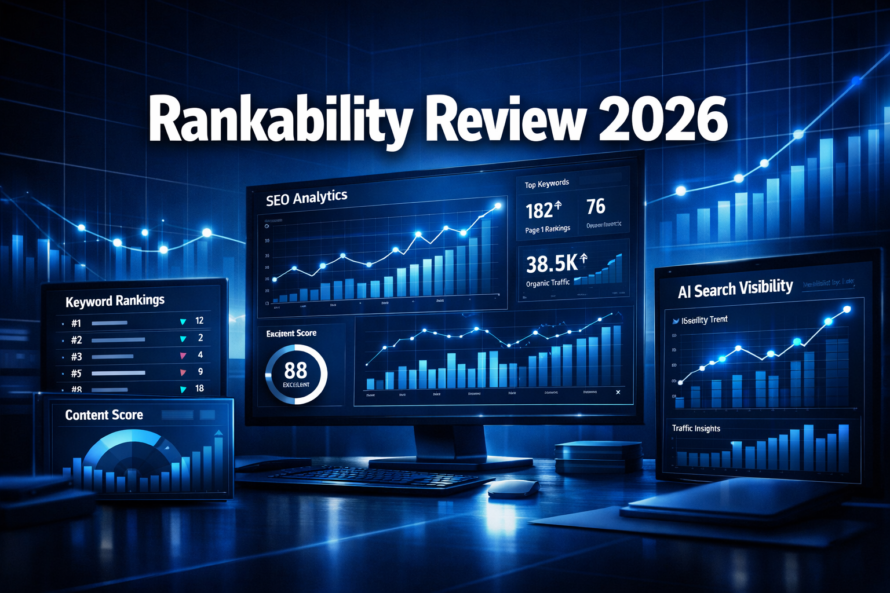
Best for: Digital agencies, SEO consultants, and multi-site operators who need a coordinated agentic workflow that scales across client portfolios.
SEO Gets — Best for Autonomous Google Search Console Data Synthesis
SEO Gets is a dedicated analytics platform that replaces or augments Google Search Console with a significantly richer data surface.
In the context of agentic site maintenance, its value is in providing agents with the high-quality data signals they need to make accurate decisions about content optimization priorities.
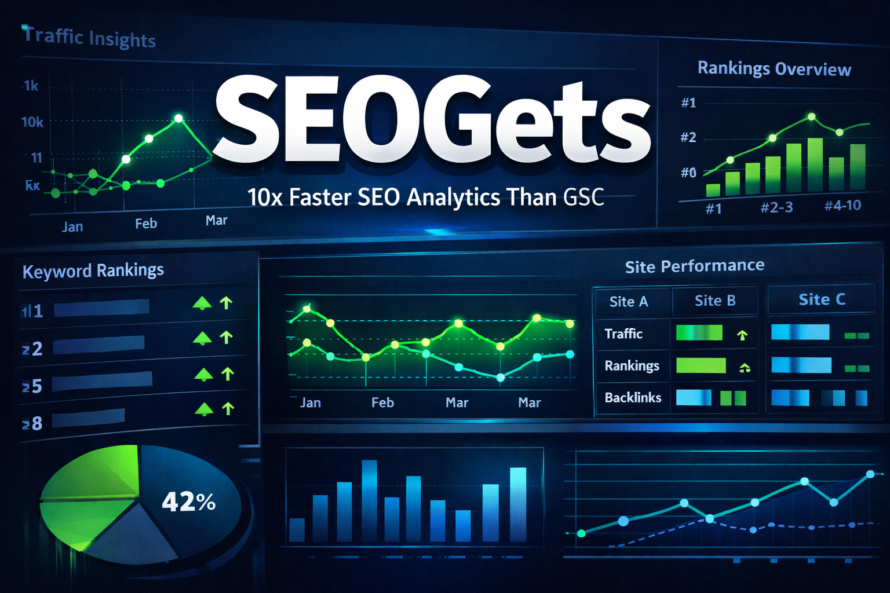
Key capabilities include 50,000 data rows, content grouping, topic clustering, index health monitoring, and multi-site management, all of which feed directly into agentic workflows that depend on comprehensive, current data to function correctly.
Best for: Data-driven site owners, agencies, and technical teams who want to give their agentic workflows the best possible data foundation, particularly those already familiar with Google Search Console and looking to extend its capabilities.
Agentic SEO for Beginners: How to Start with Autonomous Site Maintenance in 2026
One of the most common misconceptions about agentic site maintenance is that it requires deep technical expertise to implement. In 2026.
The systems have matured to the point where a motivated beginner, working from a solid SEO starter guide foundation, can deploy meaningful autonomous workflows within days rather than months.

We recommend the following sequence for anyone beginning their journey with autonomous site maintenance.
Establish your foundation. Before deploying any agent, ensure you understand the core principles of website optimization, including how keyword research works, what technical SEO involves, and how organic traffic is generated. Our SEO Starter Guide covers this foundational knowledge clearly and practically.
Select a single-agent starting point. Begin with one tool that handles content optimization autonomously. BlogSEO is particularly well-suited for this first step, as it handles the research, writing, and publication cycle without requiring coordination between multiple platforms.
Connect your Google Search Console data. Any autonomous site maintenance workflow is only as good as the data it operates on. Connecting your Google Search Console account ensures your agents are making decisions based on real performance data rather than generic assumptions.
Expand gradually. Once your content optimization agent is running reliably, introduce technical SEO monitoring and link building automation. Adding capabilities incrementally gives you visibility into what each layer contributes before compounding complexity.
Review and refine monthly. Agentic systems improve their outputs over time, but they benefit significantly from periodic human review. Spend time each month assessing what the agents have produced, what the organic traffic data shows, and where you want to adjust the system’s priorities.
“The most effective approach in 2026 is to treat agentic site maintenance as a system you build and refine, not a switch you flip. The foundational work, from understanding keyword research to knowing your technical SEO baseline, is what allows the agents to work intelligently on your behalf.”
Content Automation and GEO: The Next Layer of Autonomous Site Maintenance
In 2026, autonomous site maintenance extends beyond traditional content optimization into Generative Engine Optimization (GEO) the practice of structuring site content so that AI models cite your site as an authoritative source in their generated responses.
An astonishing 93% of searches in conversational AI mode end without a click to an external website, which means earning a citation inside an AI-generated answer has become as valuable as any traditional organic traffic signal.

Agentic SEO systems in 2026 are increasingly being designed to handle GEO alongside traditional website optimization.
This means agents are not only optimizing your content for human readers but also structuring and formatting it to meet the specific signals that AI citation models favor: clear factual claims, authoritative source attribution, structured data markup, and consistent topical depth.
For a thorough breakdown of this emerging layer, our guide to Generative Engine Optimization and Citation SEO in 2026 covers both the principles and the practical implementation steps in detail.
The connection between GEO and agentic site maintenance is direct: the same autonomous content optimization workflows that keep your pages current for human readers also produce the structured, authoritative content that AI citation models prefer. Investing in one reinforces the other.
Did You Know?
AI agents can reduce the time spent on keyword research by 80% and boost general content optimization efficiency by 30%, delivering measurable productivity gains for site owners who automate their maintenance workflows.
Source: storychief.io
Agentic SEO and the Human Element: Building Authority AI Cannot Replicate
One of the most important strategic considerations in deploying autonomous site maintenance is understanding where agentic systems excel and where human input remains irreplaceable. In 2026, the most successful site owners operate at the intersection of both.
Agentic systems are exceptional at scale, consistency, and data processing.
They will execute keyword research cycles at 3am without complaint, run technical SEO audits across hundreds of pages without fatigue, and manage internal link building across a large content archive without losing track of the architecture.
These are tasks where human effort introduces bottlenecks and inconsistency.
However, the dimension of genuine authority, the kind that comes from original perspective, lived experience, and demonstrated expertise, remains a human asset.
As AI-generated content scales across the web, the differentiating factor for high-authority sites in 2026 is the authentic human voice and perspective woven into content that agents then optimize and maintain.
Understanding how to build and leverage these personal brand authority signals is what separates sites that compound in authority from those that plateau.
The practical implication is clear. Use agentic SEO tools to handle the mechanical work of autonomous site maintenance, the content optimization cycles, technical SEO monitoring, link building workflows, and Google Search Console data synthesis.
Reserve your direct contribution for strategy, original positioning, and the authentic expertise that neither an AI agent nor a competitor can replicate.
Comparing the Best Agentic SEO Tools: A Side-by-Side Overview
| Tool | Best For | Key Agentic Capability | Beginner Friendly |
|---|---|---|---|
| BlogSEO | Content-heavy publishers, solo operators | Full content optimization cycle automation | Yes |
| BlogBuster | Topical authority builders, agencies | Autonomous cluster architecture and link building | Moderate |
| Rankability | Agencies, multi-site managers | Keyword research to publish pipeline with AI visibility tracking | Moderate |
| SEO Gets | Data-driven operators, technical teams | Enhanced Google Search Console data synthesis for agentic workflows | Intermediate |
Technical SEO Automation: What Agentic Systems Handle in 2026
Technical website optimization remains one of the areas where agentic systems deliver the most consistent value.
Most site owners understand that technical SEO is important but find it difficult to maintain ongoing vigilance over a site’s technical health alongside content and business responsibilities.
Agentic systems resolve this by operating as a continuous monitoring layer. The following technical tasks are now routinely handled autonomously in 2026 by well-configured agentic workflows:
Crawl error detection and triage: Agents identify 4XX and 5XX errors as they occur and either resolve them automatically or escalate them with context for human review.
Core Web Vitals monitoring: Continuous checks against page speed and usability metrics, with flagging when performance drops below defined thresholds.
Schema markup implementation and validation: Agents can identify pages that would benefit from structured data and implement appropriate schema, directly improving how content appears in both traditional and AI-generated results.
Duplicate content identification: Continuous scanning for content overlap that could dilute a site’s topical authority signals.
XML sitemap and robots.txt management: Automated updates when new content is published, ensuring crawl accessibility remains accurate across the site.
Internal link building optimization: Regular auditing of the internal link architecture, with recommendations or direct implementation of improvements to distribute authority and improve content discoverability.
For site owners who have worked through a comprehensive SEO tutorial or SEO starter guide framework, these technical capabilities will be familiar in concept.
The difference in 2026 is that executing them no longer requires scheduling dedicated time or hiring a specialist for ongoing maintenance.
The agent handles the monitoring and executes fixes within defined parameters, freeing human time for higher-leverage decisions.
Autonomous Site Maintenance for Content-Driven Sites: A Practical Workflow
For publishers, bloggers, and content-driven businesses, the most impactful agentic SEO workflow combines ongoing keyword research, content optimization cycles, and organic traffic analysis into a single coordinated system.
Here is how a practical autonomous site maintenance workflow operates in 2026 for this type of site.
Continuous keyword research layer. An agent monitors query data, identifies emerging opportunities, and adds them to a prioritised content queue without manual curation. The keyword research phase, which traditionally required hours of manual analysis, runs continuously in the background.
Content brief generation. When a new content opportunity is prioritised, the agent automatically generates a detailed content brief, incorporating current keyword research data, competitor analysis, and topic depth requirements.
AI-assisted content drafting. Using the brief, a content generation agent produces a draft aligned to the site’s brand voice and technical SEO requirements. For sites using tools like BlogSEO, this step is fully automated with built-in website optimization scoring.
On-page content optimization scoring. Before publication, each piece is evaluated against on-page optimization criteria, with the agent adjusting structure, headings, internal link building, and keyword distribution to meet the site’s standards.
Publication and Google Search Console monitoring. After publishing, the agent monitors the new content’s performance in Google Search Console, tracking organic traffic acquisition, click-through rates, and position data to feed future optimization decisions.
Freshness cycles. When performance data indicates a piece is declining, the agent triggers an update cycle, refreshing the content with current information, updated keyword research data, and improved on-page optimization.
This workflow, which would require a full-time content team to execute manually at any meaningful scale, operates autonomously with human oversight applied at the strategy and quality review level rather than at every individual task.
Conclusion: Agentic SEO and Autonomous Site Maintenance Define the 2026 Standard
Agentic SEO: Autonomous Site Maintenance 2026 is not a trend to monitor from a distance. It is the operational framework that separates sites experiencing compounding organic traffic growth from those stuck in manual maintenance cycles that constrain their output and consistency.
We have covered the core capabilities that define genuine agentic site maintenance, from autonomous keyword research and content optimization to technical SEO monitoring and Google Search Console data synthesis.
We have reviewed the best tools available in 2026, with BlogSEO and BlogBuster standing out as the strongest starting points for most site owners, whether you are approaching autonomous site maintenance for the first time or scaling an existing workflow.
The proven approach in 2026 is to build your agentic system methodically: start with a solid foundation in website optimization principles, deploy one well-chosen tool to handle your core content optimization cycle, add technical SEO and link building automation as your confidence grows, and apply your human effort to the strategy and authority-building work that agents cannot do on your behalf.
The system is available. We have laid out the blueprint. The next step is yours.
Frequently Asked Questions
What exactly is Agentic SEO and how is it different from regular automation in 2026?
Agentic SEO refers to AI agents that reason through tasks, adapt to new data, and make decisions independently rather than following fixed scripts. Unlike basic automation, which executes the same steps regardless of context, agentic systems for autonomous site maintenance evaluate conditions, prioritise actions, and adjust their approach based on real-time performance data.
Is autonomous site maintenance worth it for a small website or a beginner in 2026?
Yes, and in many ways it is more impactful for smaller sites than for large ones, because a solo operator or small team benefits most from having the mechanical work of website optimization handled automatically. Starting with a focused tool like BlogSEO and a solid SEO starter guide foundation makes the transition accessible regardless of prior technical experience.
Can agentic SEO tools really handle keyword research without human input?
In 2026, yes — leading autonomous site maintenance platforms perform continuous keyword research by monitoring query data, analysing content gaps, and prioritising opportunities automatically. AI agents have been shown to reduce time spent on keyword research by up to 80%, delivering results that match or exceed manual processes for most standard use cases.
How does autonomous site maintenance interact with Google Search Console data?
Agentic systems integrate directly with Google Search Console to pull performance data, track organic traffic trends, identify underperforming content, and trigger optimization actions based on current signals. This closes the loop between monitoring and action, which is the defining advantage of agentic workflows over traditional manual review processes.
What is the best agentic SEO tool for content optimization in 2026?
BlogSEO is our top recommendation for autonomous content optimization in 2026, offering a complete workflow from keyword research to publication with built-in on-page optimization scoring. For teams focused on topical cluster management and internal link building at scale, BlogBuster provides the most systematic architecture-level approach to autonomous site maintenance.
Does Agentic SEO work for technical SEO tasks or just content?
Agentic SEO: Autonomous Site Maintenance 2026 covers both content and technical dimensions. Current agentic platforms handle crawl error detection, Core Web Vitals monitoring, schema markup implementation, internal link building optimization, and sitemap management alongside content optimization and keyword research workflows.
How much human oversight does autonomous site maintenance still require in 2026?
The most effective autonomous site maintenance systems in 2026 operate with minimal daily human input but benefit from structured monthly review. Agents handle the execution layer — keyword research, content optimization, technical SEO monitoring, and link building — while human review focuses on strategic direction, quality assurance, and the authority-building decisions that require genuine expertise and perspective.